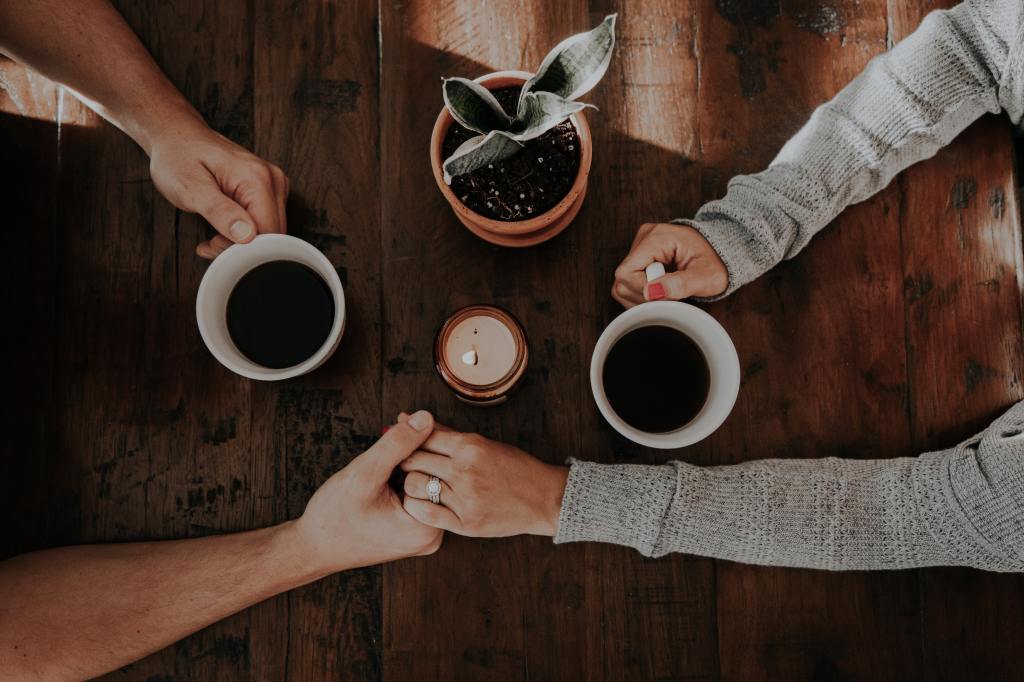
Yesterday, I was chatting with my boyfriend and we got into a discussion where he pointed out something in my behavior and then posed a question about what he observed. I took pause because, lo and behold, I was indeed doing the thing he said but I wasn’t really sure where it was coming from. Sure, it was something that I had noticed myself doing in the past, but I kinda let it fall by the wayside or buried it with other swirling thoughts and moved right on my merry little way. But when someone outside of you points something out, you have two choices. To ignore it, or to take a second glance at it. To put it under the microscope and really zone in to see what’s going on beneath the surface. And after he pointed this thing out about me, he then, ever so gently and kindly, so delicately said, “Stef, I don’t want to be the center of your world.”
“Huh? I’m- I’m sorry, what?”
“I’m not interested in being the most important thing for you. I am interested in having a proper place in your heart, but you have other things that are equally important in your life and for you to abandon those or leave those behind and make me the most important thing…well, I’m just not interested in that.” I just stared at him, dumbfounded by how healthy, self-aware, and thoughtfully intentional he is. I couldn’t believe my ears. “Wait a second? Let me get this straight. You’re telling me you DON’T WANT or NEED to be the most important thing in my life. You’re actually asking for me to NOT make you that?” Silence. “Who are you and where did you come from?”
That’s a question I tend to ask him frequently because you see, for as long at I can remember, the primary relationships that have surrounded me from the time I was a small child up until presently, have typically (not always) been relationships that have be co-dependent or enmeshed. And I don’t actually think I can remember being in a romantic relationship that was not. Now these terms have been thrown around a lot more the past few years or so, but for those of you who aren’t aware of what co-dependence is or means, let me catch you up to speed.
A co-dependent person will heavily rely on others for their sense of self and well-being. There is no ability for them to distinguish where they end and where their partner begins. This enmeshing happens when one person feels a sense of responsibility to another person to meet most of their needs, be it emotional or physical, and for their partner to meet all of their needs in return, in order to feel okay about who they are. In essence, if one is not okay, then the other isn’t okay either.
I looked up some traits of what a co-dependent relationship include, and this is what I found:
- A lack of healthy boundaries or none whatsoever
- People-pleasing behaviors (uh huh…)
- Reactionary responses
- Unhealthy or ineffective communication
- Manipulating behaviors
- Difficulty with emotional intimacy
- Controlling behaviors
- The need to blame each other/someone (yikes!)
- Low self-esteem for one or both partners (gulp)
- No personal interests or goals outside of the relationship (insert eye roll here!)
Codependent relationships aren’t healthy and they don’t allow partners the room they need to be themselves, to grow and to be autonomous. These unhealthy relationships involve one partner, or both, relying heavily on the other and the relationship for their sense of self, feelings of worthiness and overall emotional well-being.
In my previous relationships, and primarily my previous marriage, this is something my partner not only was himself, but he also required this of me in order to make himself okay. And I bought into this kind of enmeshed relationship because the most present examples in my own life had been this, so it seemed completely normal and natural to me. Even romantic in a sense. Yikes!
But the truth is, being each other’s all or everything is NOT the answer. It does, however, get romanticized as being the ultimate, doesn’t it? That is what true love looks like – right!?! You see it in rom coms all the time. It’s the can’t eat, can’t sleep, can’t live without each other, have to do everything together, every waking moment, googly-eyed kinda love that we are all striving for.
Or is it?
They don’t tell you in the fine print that that kind of love will leave you exhausted, dissatisfied, disappointed, highly pressurized, and that it will eventually fizzle out or implode. So back to my boyfriend saying he wasn’t interested in being the most important thing in my life. When he said that, something happened to me. Something huge actually. It was like a shift took place. It was like I had been waiting for and needed his “permission” to live my life, to be my best self, and to not sacrifice who I was in order to be with him and be the best for him. Sounds silly, doesn’t it? Unhealthy. Enmeshed. Co-dependent. Simple. Obvious. And yet it was also a very profound moment for me. One I’ll continue to thank him for, because I’m not sure he has realized the impact his words had on my heart and my perspective.
So if not co-dependent, then what should a healthy relationship look like? I’d like to introduce something called interdependence. Interdependence is where both partners recognize and value the importance of the emotional bond they share with one another, while maintaining a solid sense of self within the relationship dynamic.
What are some traits of what an interdependent relationship include?
- Healthy intentional boundaries
- Active listening
- Time for one’s own personal interests
- Clear communication
- Taking personal responsibility for one’s behaviors and responses
- Creating a safe place for each other to be vulnerable
- Engaging and responding to each other
- Healthy self-esteem
- Being open and approachable with each other
Only when partners feel loved and cherished, valued and safe, can the relationship create an atmosphere where the couple can be interdependent. They know that they are not alone in the relationship, and that they can turn toward each other safely in times of need and feel secure that their partner will be present with and for them.
This. This is what he was talking about when he said he didn’t want to be the center of my world. This. This is what I want but I didn’t know how to ask for and I certainly hadn’t been offered an olive branch like this in my relationships before. So how do you get that? How do you do that?
First off, the key to building an interdependent relationship is to know who you yourself. You have to know who you are as an individual and know what it is you are looking for in life and in a partnership. Plenty of people get into relationships out of convenience, comfort, fear, or to simply avoid being alone. Without any personal reflection or understanding of who they are, what they value, and their personal goals for the relationship, that relationship will falter. But when you know who you are, when you are solid in your own identity, your wants and desires, your needs and goals and you’re able to communicate that to a partner, that is how you will find yourself in a healthy and thriving interdependent relationship.
My dad sent me something today that also ties into this idea. Check this out:
“AARON BECK, NOTED MARRIAGE AUTHORITY SAYS THAT ONE OF THE MOST DESTRUCTIVE BELIEFS FOR A RELATIONSHIP IS ‘IF WE NEED TO WORK AT IT, THERE’S SOMETHING SERIOUSLY WRONG WITH OUR RELATIONSHIP.’” – CAROL DWECK IN “MINDSET”
When we are rejected by people that we like, it can hurt. But whether we are in a Fixed or Growth mindset can make the difference in how we respond to it. If you have a Fixed mindset the rejection is personal and as Dweck says, it’s as though “a verdict had been handed down and branded on their foreheads: UNLOVABLE! When you have a Growth mindset, your thoughts can still be ones of deep hurt, but you focus on moving on and learning from it so that future relationships will be better off for it. Dweck cites two problems in relationships when it comes to having a Fixed mindset:
1. If you have to work at it, it wasn’t meant to be
Fixed mindset people believe that a relationship is either meant to be or it’s not and if you have to work at it, well it clearly wasn’t meant to be. When you have a Growth mindset, you don’t expect everything in your relationship to be perfect. You embrace the fact that there will be some effort and work involved in working through the differences that will come up.
2. Problems indicate character flaws
Fixed mindset people don’t expect to see flaws in their partner and when they do see them they become dissatisfied with the whole relationship. When you have a Growth mindset you realize that your partner has flaws (just as you do!) and still believe you can have a great relationship.
This is such good insight. It’s SO helpful. When tough things come up, I always ran to this unhealthy and unhelpful thought: it’s not going to work out, it’s my fault, I must be unlovable, I must not be a good thing for this person, it’ll never change, this is just how it is, blah blah blah…but the truth is, we are all imperfect. We are all flawed. We all mess up. We all hurt people we love. And we are all choosing to work on things or avoid working on things. We are all choosing to grow or we are choosing to stay stagnant. We are all choosing to point the finger at someone else or to swallow our pride and apologize and try try again. The point is, you get to choose. Just because something has always been a certain way, doesn’t mean it has to remain that way. And just because you grew up thinking something was normal, doesn’t mean you have to keep buying into unhealthy ways of functioning. So today you have a choice, friends. Today I have a choice. To be co-dependent or interdependent. To have a fixed mindset or a growth mindset. To stay the same or to get better. Today I choose the latter in all of these equations and I’m so thankful to have a loving and supportive partner who sees me for me and chooses to walk alongside me as I move and grow and change into something better. And not just for him. But for myself.

 COURAGE, BRAVEHEART
Leave a comment